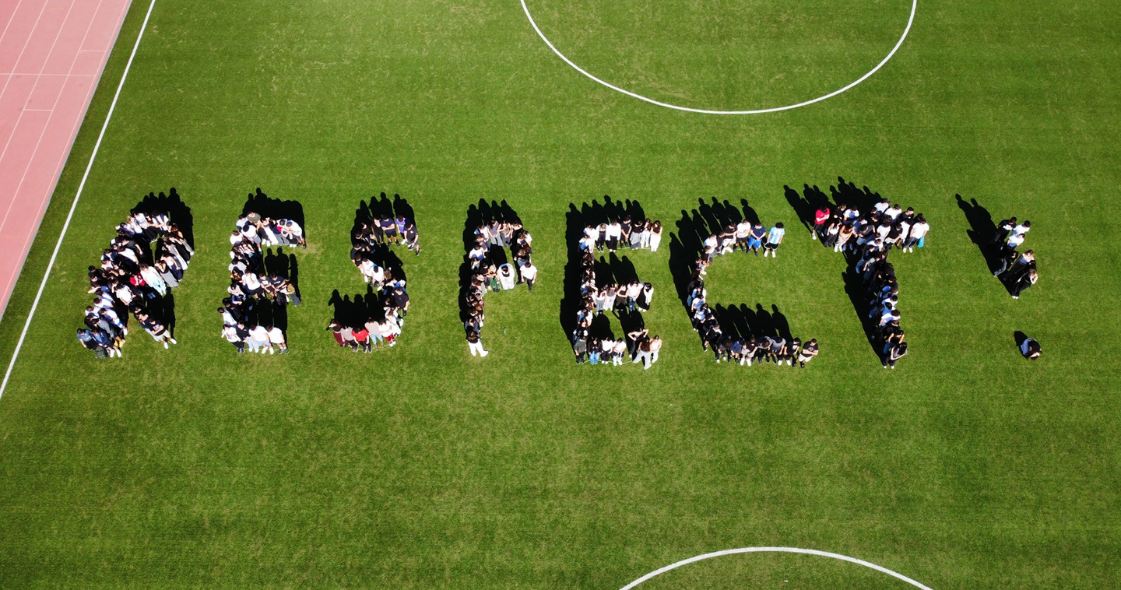
Respect Day 2026-2027

Respect Day 2026-2027

Respect for Knowledge, Value for People in the Age of AI

Respect begins with me, grows through us, and extends to the world around us.

On Tuesday, October 13, 2026, the Pierce school community will celebrate Respect Day, continuing an initiative that highlights the importance of respect, courtesy, kindness, and responsible coexistence.

This year’s theme, “Respect for Knowledge, Value for People in the Age of AI,” does not mean that all activities will focus exclusively on Artificial Intelligence. Rather, it serves as a starting point for re-examining the meaning of respect in a time of rapid technological and social change. Some activities are connected to technology and knowledge, while others focus on human relationships, collaboration, diversity, the school environment, society, and the natural world.

From Kindergarten through Lyceum and IB, each educational level will approach the theme in an age-appropriate way, seeking its own answer to a shared question: “How do we want to behave, and what kind of people do we want to be in a world that is changing so quickly?”

The following initiatives and activities have been designed and implemented for each School level:

Respect begins with me, grows through us, and extends to the world around us!

What does respect mean to a child? How do I show that I am listening to you? How do I care for myself, my friends, my school, and the world around me?

As part of Respect Day, Kindergarten and Pre-Kindergarten students will take part in a week filled with discussion, play, creativity, music, cooking, and collaboration. Parents will join the experience through a shared cooking workshop, while Kindergarten students will meet first-grade students and sing together. Finally, the ideas and voices of all 10 classes will come together in a shared display.

1st & 6th Grades: “Palm to Palm”

The You Are My Buddy program brings the two grades together. First graders express what makes them feel safe and respected, while sixth graders write their own promise of care and support. The paired handprints come together in a shared project.

2nd Grade: “The Jenga of Respect”

Students work together on short challenges and small acts of respect. Each piece of the tower is linked to values such as kindness, honesty, rules, responsibility, and care.

3rd Grade: “The Path of Respect”

A large floor game presents dilemmas drawn from everyday school life. Students make choices, explain their thinking, listen to different perspectives, and discover how values guide their decisions.

4th Grade: “Breaking Down Disrespect – Aiming for Respect”

Students identify behaviors that make coexistence more difficult and match them with positive attitudes such as kindness, acceptance, listening, helping, and inclusion.

5th Grade: “The Compass of Respect – Mapping Our School”

Students work with real situations and spaces within the school, using values as a “compass” to suggest ways of addressing everyday challenges and creating a shared map of positive behavior.


1. Respect and Self

How do knowledge, technology, and AI affect the way we see ourselves? Students will discuss social media, comparisons with images that may have been created or altered by AI, and how to use technology without losing our individuality.

Message: Respecting myself means recognizing my own worth without needing validation from the image others create.

2. Respect and Family

How is technology changing the way we communicate within the family? Students will explore whether technology brings us closer together or pushes us apart, and how we can preserve meaningful human communication.

3. Respect and Friends

What does respect in friendship mean in the age of social media and AI? Students will discuss consent in the use of photos and videos, fake content, and the difference between digital communication and genuine human connection.

4. Respect and Classmates – School Life

What does digital respect mean? What responsibility do we have when using AI to create or distribute content?

Question: Just because technology allows me to do something, does that mean I have the right to do it?

5. Respect and School – School Spaces and Teachers

A discussion on the student–teacher relationship, personal effort, and care for the school environment.

Message: Technology can support education, but it cannot replace human connection.

6. Respect and Neighborhood – City

How can knowledge and technology contribute to better cities, accessibility, safety, and the responsible use of data?

Question: A smart city also needs informed and responsible citizens.

7. Respect and Learning

How do we respect knowledge in the age of images, the internet, and AI? Students will discuss evaluating information, misinformation, and the difference between “having an answer” and “understanding.”

Central message: “We respect knowledge when we do not simply look for the answer, but make the effort to understand, verify, and think.”

8. Respect and Sports

The role of technology in training and officiating, along with the enduring importance of respect for one’s opponent.

Message: Technology can improve performance, but respect remains a human choice.

9. Respect and the Environment

How can knowledge and technology help protect the environment? And what is the environmental cost of technological development itself?

10. Respect and Diversity

Students will explore biases and stereotypes that may exist in data and AI systems, as well as our own responsibility for creating a more inclusive society.

11. Respect for Other Cultures

Knowledge and technology allow us to learn about other cultures. Students will explore the difference between simply knowing facts about a culture and making a genuine effort to understand it.
A. Class Activities

1. “Our Perspective on Respect Day”

Students create a poster and a short video expressing how they understand respect for knowledge and the value of people in a changing world.

2. “Our Own Code for AI”

Students collaboratively develop a short code for the responsible and human-centered use of AI, based on principles such as reliability, privacy, academic integrity, transparency, and human judgment.

3. “I Have Something to Teach You” – Knowledge Passes from Person to Person

Students share a piece of knowledge, a skill, or a personal experience and discuss what is different when we learn something through a human relationship.

4. “Humans and AI Create: Can We Tell the Difference?”

Students compare work created by people and by AI systems, exploring creativity, intention, lived experience, and the personal story of the creator.

5. “Mine or AI’s?” Campaign

Posters and digital infographics focus on academic integrity, plagiarism, intellectual property, citing sources, and the responsible use of AI.

6. “Human + AI” – Who Solves the Problem Better, and Why?

Students and an AI tool address the same problem or question. They compare approaches, evaluate results, and explore what humans contribute and what technology contributes.

7. “The Wall of Dilemmas”

Anonymous responses to questions such as: “If AI wrote your assignment and you received top marks, who really deserved the grade?” and “Is there something you would never want a machine to decide for you?”

8. “Human + Artificial Intelligence: Who Creates?”

Students create an artistic interpretation of the work of a well-known painter and then create a second version using AI. They compare the creative processes and may conclude the activity with a small physical or digital exhibition.

B. School-Wide Activities

1. Main Talk in the Theater

A talk on knowledge, human judgment, and personal responsibility. Starting point: “If a machine can write, translate, calculate, summarize, and answer within seconds, why is learning still valuable?”

2. Student Debate – “AI: A Tool That Empowers Us or a Technology That Risks Thinking for Us?”

Students argue different positions on contemporary dilemmas. The goal is to promote evidence-based argumentation, active listening, and respect for opposing viewpoints.

“Respect in Everyday Life – Listening to Every Voice”

Students will conduct short interviews with members of the school community, including gate staff, Technical Services, and the IB Secretariat.

They will explore what respect means within the school environment, which behaviors demonstrate a lack of respect, and what more the school community could do. Examples will include helping people with mobility difficulties, showing courtesy, following rules, maintaining cleanliness, using inclusive language, and volunteering.

The material will be used to create an article for the school magazine, highlighting the idea that respect is expressed through the small everyday choices that shape our community.


OPPORTUNITIES

Careers at Pierce

Pierce is committed to leveraging the talent and potential of its employees while fostering an inclusive workplace, free from unconscious bias, predispositions, and stereotypes.


Become a donor

Support Us

For more information, please contact the Office of Development & Alumni Relations

Copyright © 2026

Website by BACKBONE on made possible with Expresia